

Jakarta, December 13, 2025 — Advances in molecular diagnostic
technology continue to reshape the paradigm of cancer management, particularly
in disease monitoring following curative treatment. One innovation that has
gained increasing attention is Minimal Residual Disease (MRD) testing,
which enables the detection of residual cancer cells at the molecular level
that are no longer identifiable through conventional radiological or
pathological examinations.
In response to the growing need for
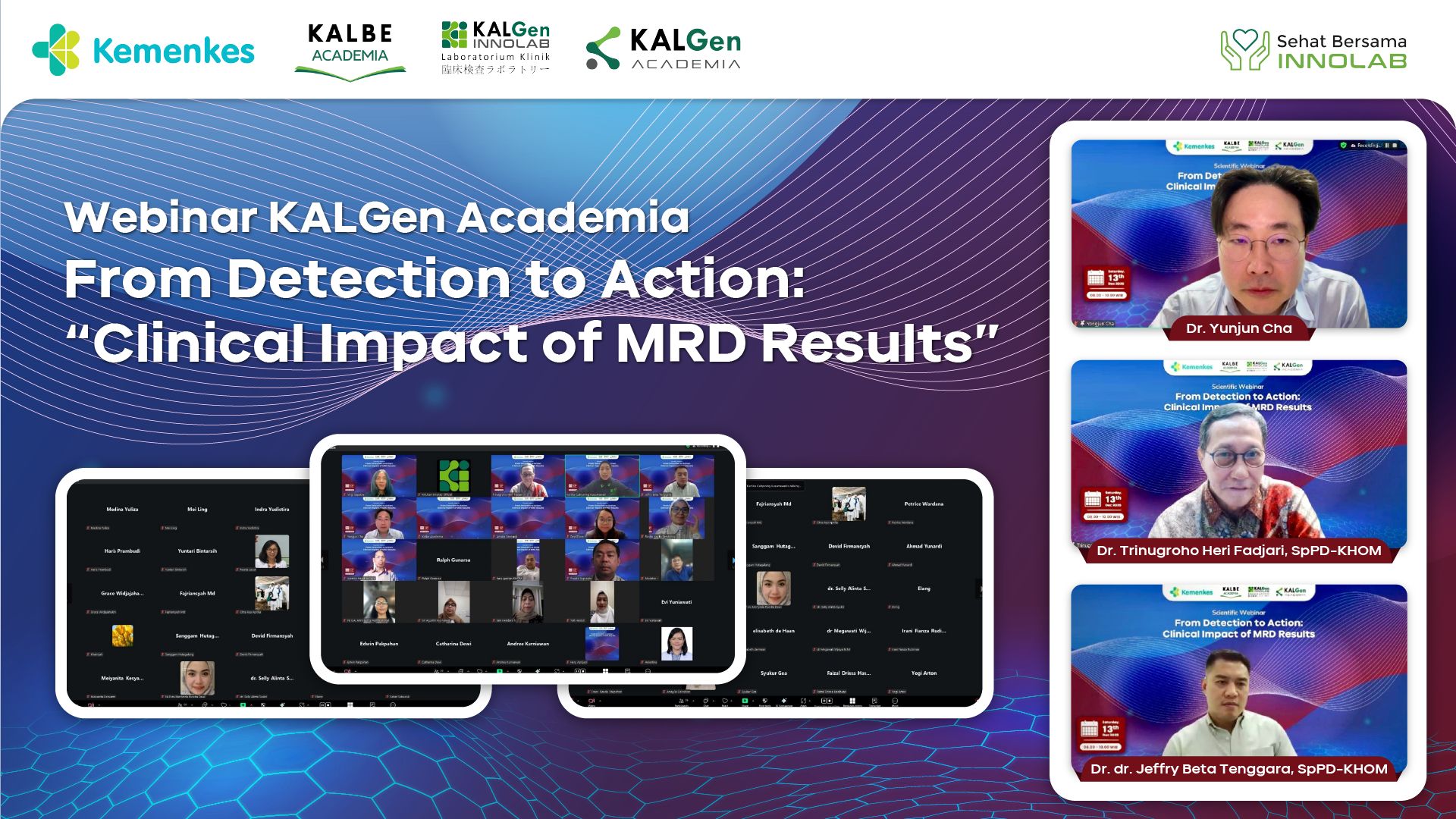
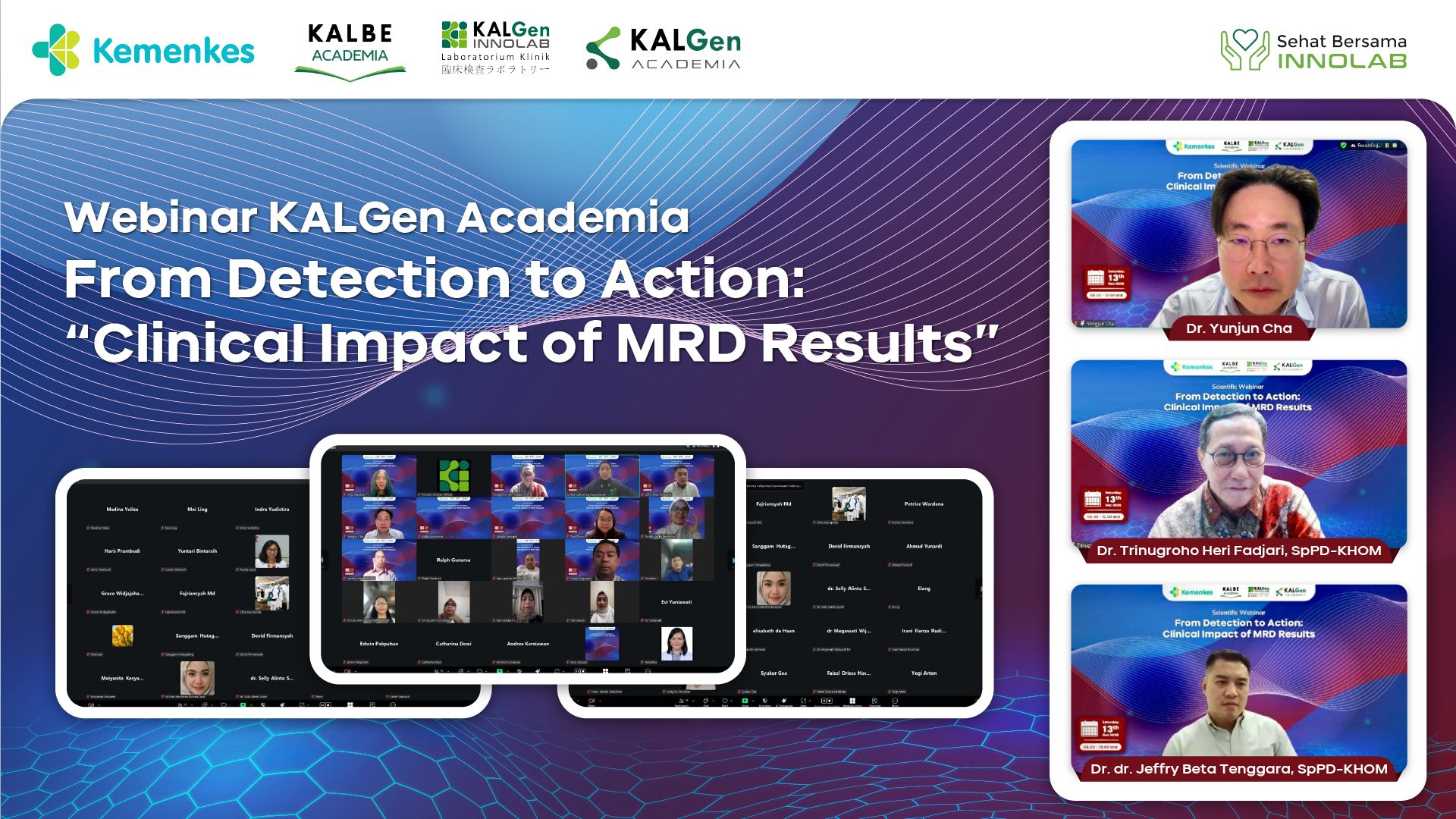
deeper clinical understanding, KALGen Academia organized a scientific
webinar entitled “Clinical Impact of MRD Results.” This webinar provided
an in-depth discussion on the clinical application of MRD testing based on
circulating tumor DNA (ctDNA) using Next Generation Sequencing (NGS)
technology, as well as how MRD results can be interpreted to support more
precise and evidence-based therapeutic decision-making.
The webinar featured two distinguished
speakers. Dr. Yongjun Cha (Former Medical Oncologist, National Cancer
Centre Korea) delivered the first presentation entitled “Detecting the
Invisible: ctDNA in Minimal Residual Disease Monitoring.” The second
session was presented by dr. Trinugroho Heri Fadjari, Sp.PD, K-HOM, with
the topic “MRD Testing: Guiding Precision in Cancer Care.” Both speakers
comprehensively addressed the scientific principles and clinical applications
of MRD testing in an informative and practical manner.
The scientific discussion was moderated
by Dr. dr. Jeffry Beta Tenggara, Sp.PD, K-HOM, who guided the
question-and-answer session and enriched the discussion with clinically
relevant insights applicable to daily medical practice.
The webinar was attended by
approximately 100 participants, the majority of whom were consultant
internists in hematology-oncology (Sp.PD, K-HOM) from various regions
across Indonesia. In addition, the audience included physicians, clinicians,
pathologists, and other stakeholders with a strong interest in advancing and
updating knowledge in molecular diagnostics for clinical practice.
MRD: Detecting the Invisible Disease
In many solid tumor cases, patients may
achieve a complete response following surgery or systemic therapy.
However, the risk of recurrence often persists due to the presence of
microscopic residual cancer cells that escape detection by standard diagnostic
methods. ctDNA-based MRD testing enables the identification of this
residual disease through the analysis of tumor-derived DNA fragments
circulating in the bloodstream.
Supported by Next Generation
Sequencing (NGS) technology, MRD testing offers high sensitivity in
detecting molecular alterations associated with residual disease. Beyond
therapy response monitoring, this approach serves as a powerful predictive tool
for assessing the risk of recurrence at an early stage—often before clinical or
radiological manifestations appear.
From Laboratory Results to Clinical
Decision-Making
A key message emphasized during the
webinar was that the true value of MRD testing lies not only in its detection
capability, but in how MRD results are translated into clinical action.
MRD findings provide critical information across several clinical scenarios,
including:
- MRD-negative status after curative therapy
Indicates an optimal therapeutic response and a lower risk of recurrence, allowing patients to be monitored without unnecessary additional treatment. - MRD-positive status after
therapy
Suggests the presence of molecular residual disease and an increased risk of relapse, serving as a basis for considering treatment intensification or closer surveillance. - Changes in MRD status during follow-up
Rising ctDNA levels may signal early recurrence, even before detection by imaging, thereby enabling earlier clinical intervention.
These discussions reinforced the role
of MRD as a powerful risk stratification tool, supporting more
personalized and precise cancer to improve clinical decision-making and
better patient outcomes in the era of precision medicine.
KALGen Academia’s Commitment to
Precision Oncology Education
Through this webinar, KALGen
Academia reaffirmed its commitment as a scientific education platform
supporting the implementation of precision oncology in Indonesia. By
facilitating discussions grounded in scientific evidence and current clinical
practice, KALGen Academia aims to empower healthcare professionals to better
understand and optimally utilize molecular diagnostic technologies for the
benefit of patients.
Minimal Residual Disease is no longer merely a research concept; it has become a clinically meaningful tool with a growing impact on therapeutic direction and patient monitoring. Through continuous educational initiatives such as the “Clinical Impact of MRD Results” webinar, KALGen Academia strives to contribute.
.png)